Tuesday, May 12, 2015

destination: klickitat river trail, washington


What: The Klickitat Trail is a trail for hikers and cyclists that follows the first 31 miles of an old railroad corridor that once linked the towns of Lyle and Goldendale in Washington State.

Where: The Klickitat River empties into the Columbia River at Lyle, where you will find the lower trailhead with parking. There are several other trailheads located to the north along Highway 142, which parallels the river.  

 Click here for downloadable Klickitat Trail map in PDF format
 
Ramblers: Susan and Dave
Season: Spring 
Earthlings encountered: Bald eagles, poppies, lupine, cornflower (bachelor buttons), pollinators
Field Notes: We walked the first 2 miles of the trail to the Fisher Hill Trestle Bridge. BEWARE: There was poison oak EVERYWHERE! Stay on the trails and keep your kids and dogs at your side.


 For more information, click here: 

It's a beautiful and crazy planet.
Go forth and ramble!

Follow me!
Instagram
Susan Faye on Pinterest

Tuesday, May 5, 2015

sightings: feathered friends: baby earthlings

where:   Tualatin River National Wildlife Refuge, Sherwood, Oregon, 97123

sighted: Canada goose goslings!

field notes: There were 8 - 10 pairs of adult geese, each with 5 to 15 goslings. Spotted in the ponds south of the water delivery channel at the south portion of the main refuge. The goose families were in a protected area that is permanently closed to the public, however, the goslings were visible from the seasonal trail and just barely within range of my telephoto lens (bring your binoculars!). This part of the trail is closed to the public October 1 - April 30 to protect wintering waterfowl, and had just re-opened on May 1.


There were mallard ducklings too!

 More goslings galore...


 It's a beautiful and crazy planet.
Go forth and ramble!

Follow me!
Instagram
Susan Faye on Pinterest

Saturday, May 2, 2015

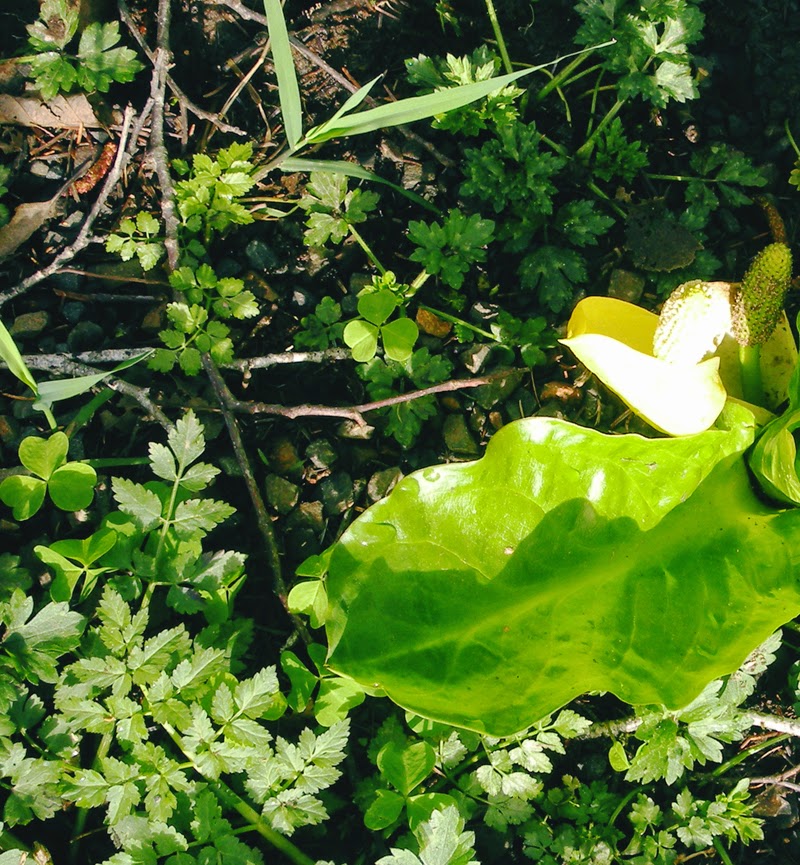
earthlings: flora: western skunk cabbage, part 2

more photos. 
because it's just so pretty, unlike its name.

[See "skunk cabbage, part 1" here.]


 It's a beautiful and crazy planet.
Go forth and ramble!
Follow me!
Instagram

Thursday, April 16, 2015

good deeds: reduce your kitchen footprint

Tip #1: Eat lower on the food chain.
Why? Fruit and vegetable production is generally better for the planet than meat production.
To find out more, read "Plants for Supper? 10 Reasons to Eat More Like A Vegetarian" by Bonnie Liebman here

For a huge list of great tips for living a greener life inside and outside of your home, visit the Greenpeace Green Guide.

Copies of my whimsical 8" x 10" art print are now available over at my Ramble & Frolic Etsy Shop. Click here:  Eat Your Veggies Print

 (it's a beautiful and crazy planet.
go forth and ramble!)

Follow me!
Instagram
Susan Faye on Pinterest

Tuesday, April 14, 2015

sightings: feathered friends: osprey

The ospreys are back!

Where: Along Hwy 153, aka the SW Bellevue Hwy, west of Amity, Oregon, just beyond the Broadmead Road junction.


Factoid: In the winter, The male and female of a Pacific Northwest osprey pair migrate separately, and head south to Mexico, then reunite at their nest in the Pacific Northwest sometime between mid-March to mid-April. The couple will use the same nest each year.


Factoid: An average nest can weigh more than 200 pounds and measure close to 4 feet across. The osprey's diet is 99% fish, so nests are built very close to a river or creek


Because ospreys have a  tendency to build nests on power and telephone poles, (which can pose dangers to the birds and can cause disruption of power), extensions are sometimes built above the pole, as in this case.


Factoid: Eggs are laid from mid April to mid May and will hatch about five weeks later.


Looks like some greenery from the surrounding farmland took root over the winter.


Nice touch!
Time to settle in.


Follow me!
Instagram
Susan Faye on Pinterest

Sunday, April 12, 2015

earthlings: flora: western skunk cabbage

scientific name: lysichiton americanus 
aka: yellow skunk cabbage, American skunk-cabbage or swamp lantern 
habitat:   swamps, marshes, bogs, wet woods, along streams and in other wetland areas of the pacific northwest, planet earth
bloom time: february through april
field notes: if you do not like the smell of a skunk eating rotting hamburger, stay upwind of this beautiful and showy earthling.


Indigenous humans used its large, waxy leaves for food preparation and storage, lining berry baskets or using them as a wrap around salmon and other foods when baked under a fire.


It was also used as a food source in a pinch, however, it must be prepared properly to avoid its poisonous effects in the raw state.

A thriving plant can have leaves as long as 135 cm long (4 feet, 5 inches), making them the largest leaves of any native plant in the Northwest.

 It's a beautiful and crazy planet.
Go forth and ramble!

Follow me!
Instagram
Susan Faye on Pinterest

Friday, April 10, 2015

destination: jewell meadows, oregon

Jewell Meadows Wildlife Area
Where:  79878 Oregon Hwy 202/ Oregon/ USA
Ramblers: Susan and Dave
Season: Spring 
Earthlings spotted: Roosevelt Elk
 

Jewell Meadows provides a winter habitat and supplemental feeding for Roosevelt elk in the Coastal Hills range in the northwest corner of Oregon. Open pastures with a creek and nearby woodlands border Oregon State Highway 202,  where you can enjoy excellent viewing of up to 200 elk.


The main meadow is a year-round refuge with no hunting or public access to the meadow. You must admire from afar. Be sure to bring binoculars and your telephoto lens!

 Unicorn? No, that appears to be an albino elk!


The wildlife area has two paved parking areas, four viewing areas and interpretive signing. Restrooms, an interpretive kiosk, and brochures about the area are available.


Best times to visit: 
November - April for elk viewing 
Year-round for bird and wildlife viewing.

 For more information, click here: 
 
Directions:  From Portland, travel west on Hwy. 26 to the Jewell Junction, just west of Elderberry Inn. Turn north on Hwy. 103, which parallels the Nehalem River for nine miles to Jewell. At Jewell travel 1.5 miles west on Hwy. 202 to the refuge area on Fishhawk Creek. Parking areas are provided at strategic points to aid viewing. 


 Follow Me on Pinterest    

     Follow me on instagram!
 Instagram